Case Studies


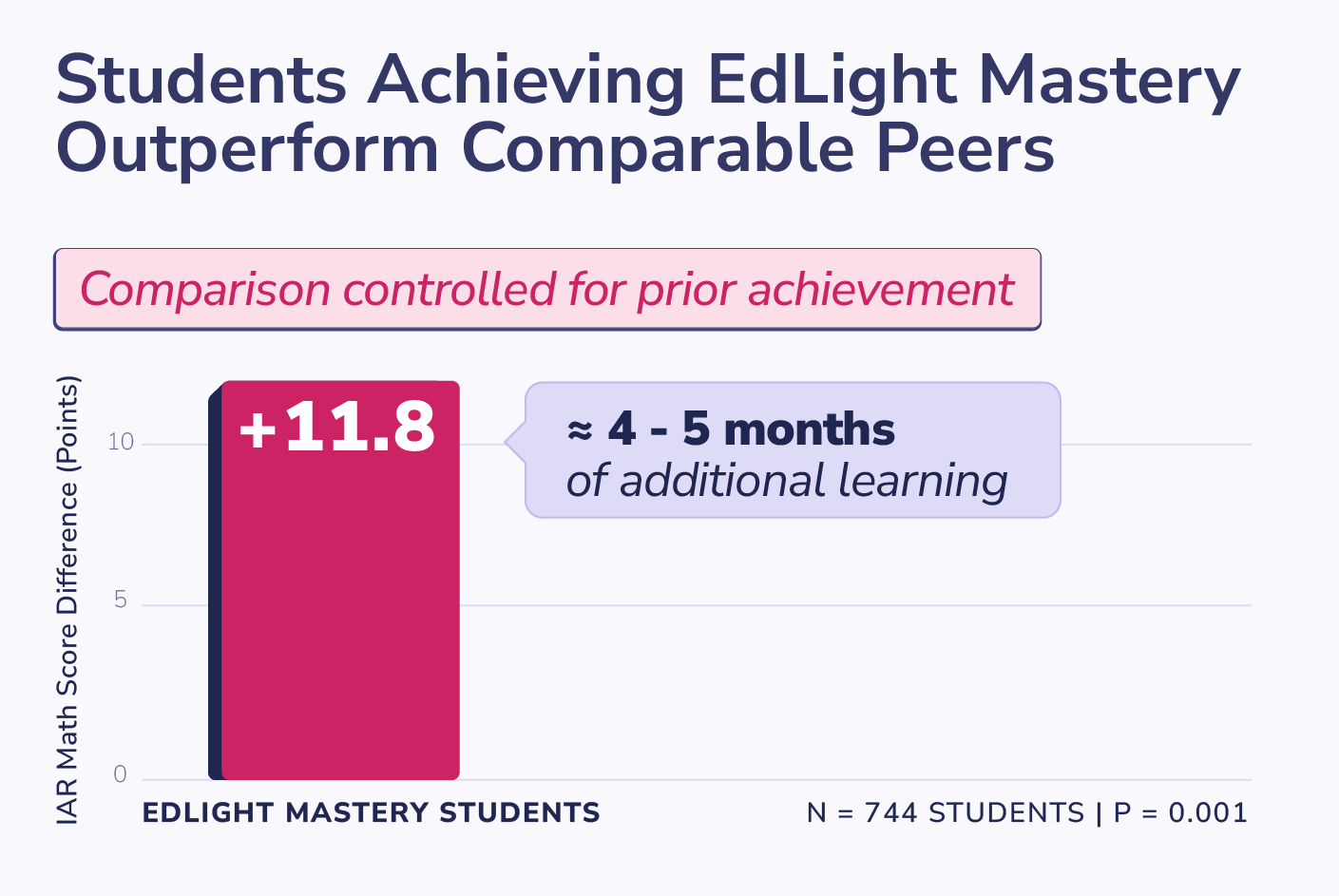
Students using EdLight’s mastery-based platform scored nearly 12 points higher on state math assessments - equivalent to 4 - 5 months of accelerated learning.
The Goal
District partners set out to solve a persistent challenge in math instruction:
How do we close the gap between what students are thinking and how teachers respond, before misconceptions turn into learning gaps?
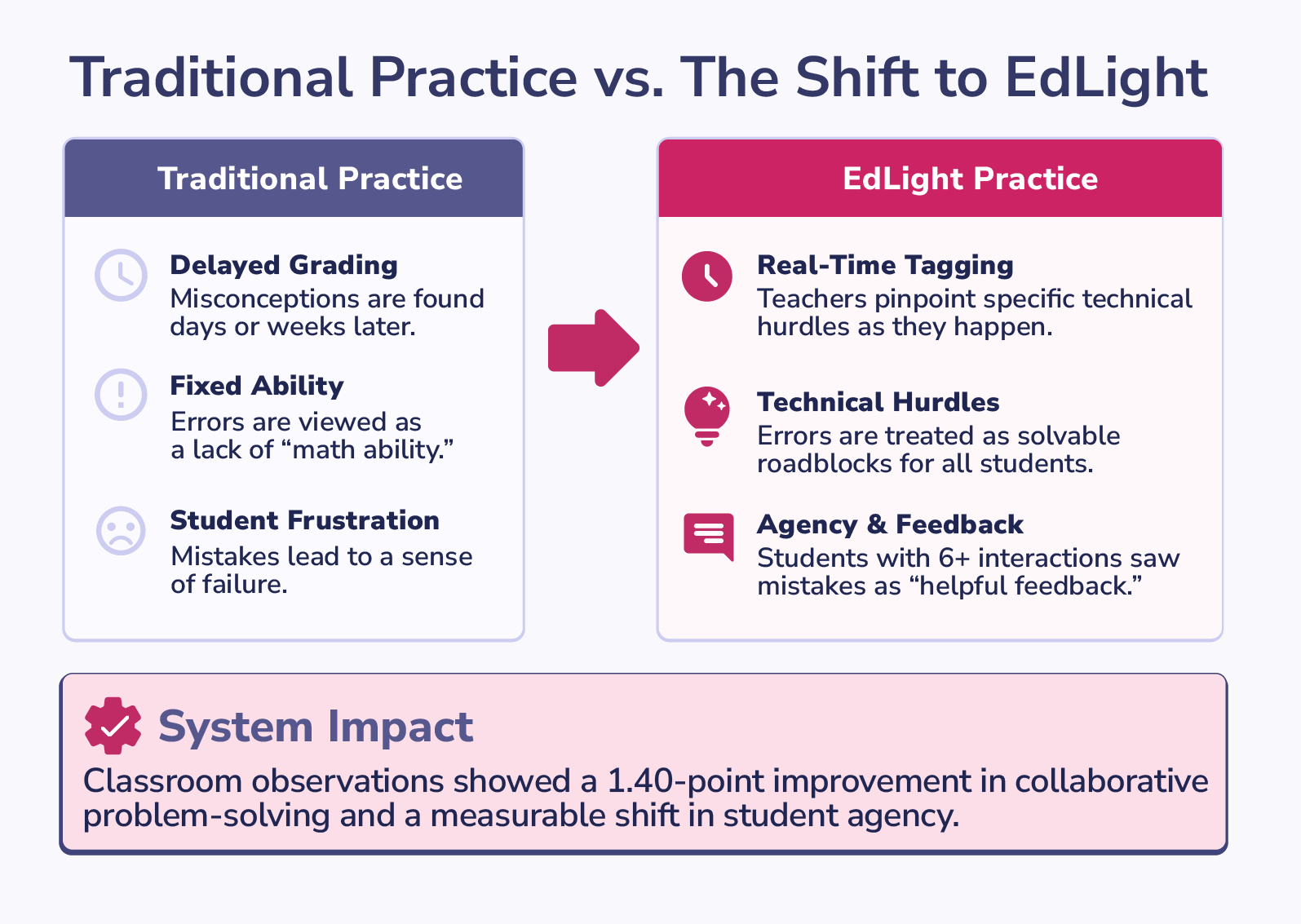
Traditional grading systems rely on delayed feedback. Teachers often don’t see student misunderstandings until after assessments, when it’s too late to intervene effectively.
EdLight was designed to address this directly, providing real-time visibility into student thinking so teachers can respond immediately, while learning is still happening.
The Results: Accelerated Growth
The strongest evidence comes from the Illinois Assessment of Readiness (IAR). Students who achieved mastery in EdLight scored +11.8 points higher than peers with similar prior achievement.
This is growth above expectation - not just improvement.
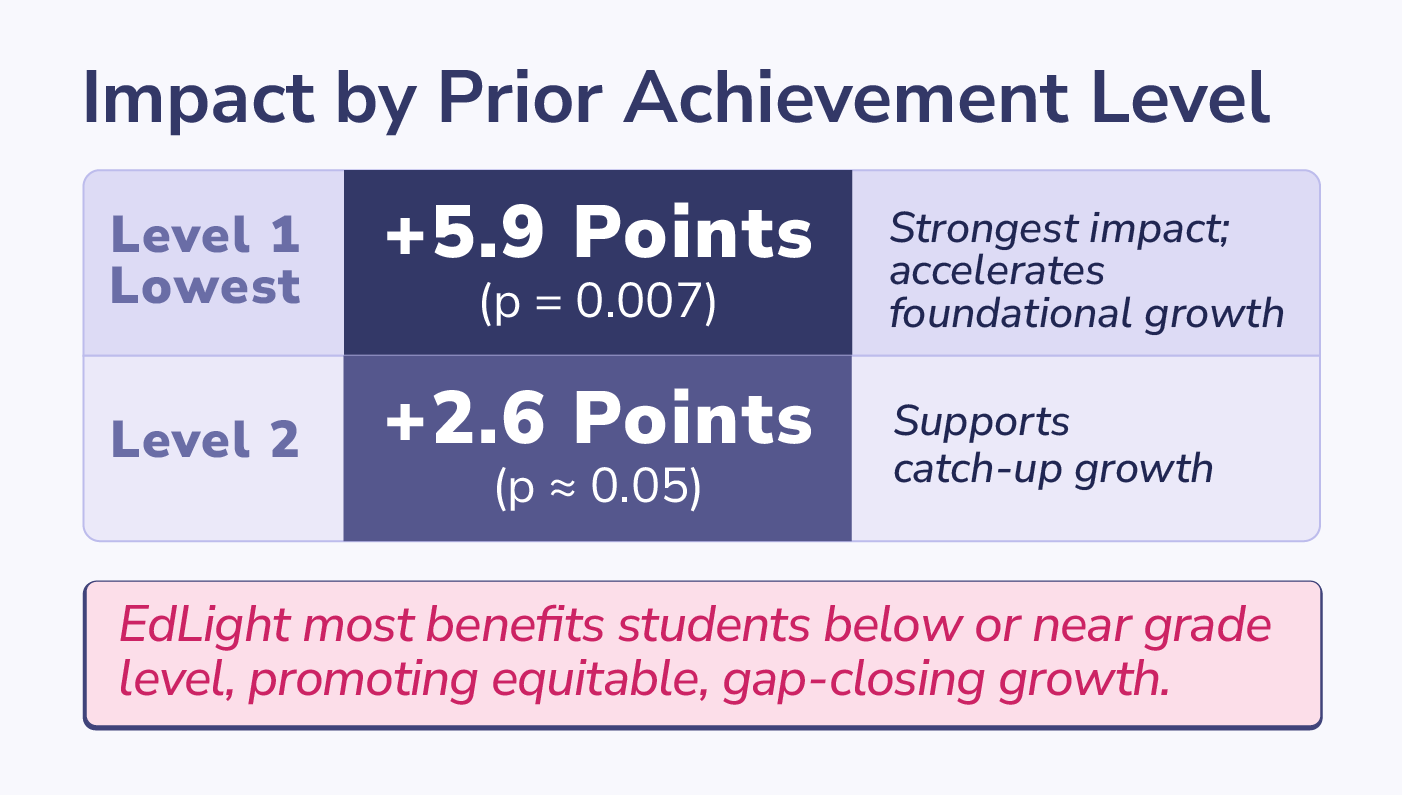
On the IAR, Level 1 students (the lowest-performing group) gained +5.9 points, showing that this approach is particularly effective in accelerating growth for students who need it most.
EdLight changes what daily classwork can tell us. Formative assessment data from EdLight explained 45% more variation in state test scores than traditional grades alone.
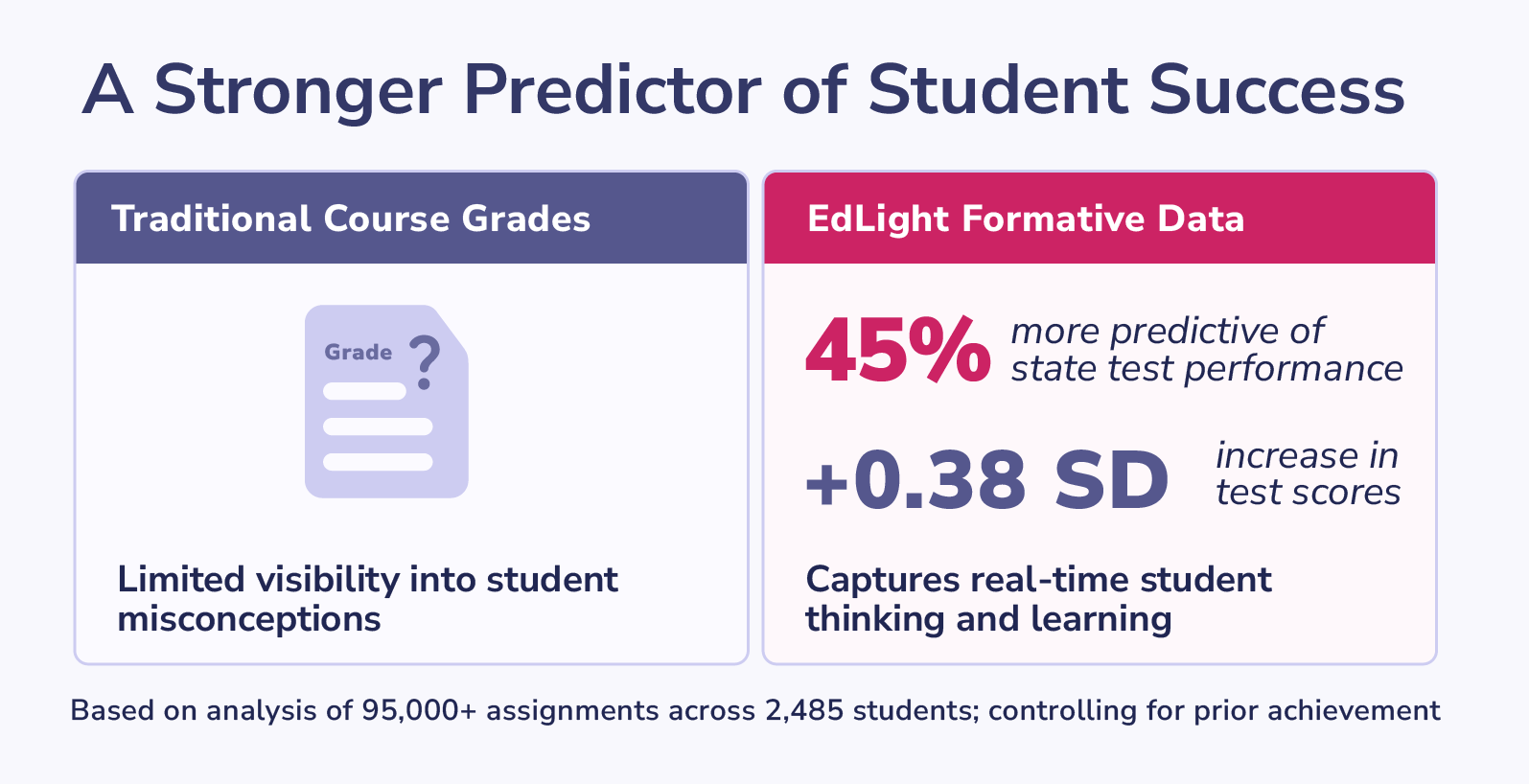
A one standard deviation increase in EdLight performance was associated with a 0.38 SD increase in state test scores. This means teachers can identify which students need support earlier and act before gaps widen.
What Changed in Classrooms to Drive These Gains?
These gains are tied directly to a shift in practice. Teachers are no longer waiting for end-of-unit results or signs of failure. They are responding while learning is still happening.
With EdLight, teachers:
This changes how students are supported. When errors are treated as specific, solvable challenges, not ability, students engage differently and outcomes follow.
When teachers used misconception tagging to guide instruction, achievement gaps for Black, Hispanic, and English Learner students narrowed significantly.
As one teacher shared:
“We were able to pinpoint misconceptions in real-time… now we catch them before it’s too late.”
Beyond the Scores: A Shift in Student Belief
Data shows what happened, students show how. In Learning Walk observations, we saw a +1.40 point improvement in collaborative problem-solving.
Through the Narrative Project, students with 6 or more interactions on the platform showed a +1 shift in viewing mistakes as helpful feedback, not failure. We tracked one student who moved from “frustrated” to “challenged (in a good way)” after 16 interactions. This is the shift underneath the results: Students are more willing to engage, persist, and take risks in their thinking. That sense of agency is what makes the gains sustainable.
The Research
We partnered with school districts across the country to evaluate student outcomes using EdLight’s AI-powered formative assessment platform.
Our analysis included:
All analyses controlled for prior achievement to isolate impact. We also conducted Learning Walk observations (114 students) and teacher interviews to understand changes in classroom practice and student experience.
Across all studies, the findings were consistent, indicating a fundamentally different approach to improving math outcomes.
These results are not just about higher scores, they reflect a change in how instruction is happening day to day. With EdLight, teachers are able to see and act on student thinking in real time. Across classrooms, that looks like:
That shift is what’s driving the gains. It’s what allows teachers to move earlier, respond more precisely, and support students before gaps widen. When this approach is used consistently, outcomes improve and gaps begin to close.
EdLight makes that shift possible - by turning student work into immediate, actionable insight.
Director of Partnerships